When comparing a theodolite vs total station, the simple answer is this: a theodolite measures horizontal and vertical angles, while a total station measures angles, distance, and can often store or process field data electronically.
Both instruments are used in land surveying, construction layout, engineering, and field measurement work, but they are not the same tool. A theodolite is typically simpler and more affordable. A total station is more advanced, more versatile, and usually the better choice for crews that need to measure points, calculate coordinates, stake out work, or collect data efficiently in the field.
This guide breaks down the key differences, when to use each instrument, the different types available, and how to decide which one fits your crew, budget, and workflow.

TLDR: A theodolite is best for measuring precise horizontal and vertical angles. A total station does that too, but it also measures distance with an electronic distance meter, calculates positions, stores data, and can speed up layout or surveying work. If you only need angle measurements, a theodolite may be enough. If you need distance, coordinates, stakeout, data collection, or one-person productivity, a total station is usually the better investment.
- Quick Answer: Theodolite vs Total Station
- What Is a Theodolite?
- What Is a Total Station?
- Theodolite vs Total Station Comparison Table
- Types of Theodolites
- Types of Total Stations
- Main Differences Between a Theodolite and Total Station
- When Should You Use a Theodolite?
- When Should You Use a Total Station?
- Cost, Crew Size, and Workflow Considerations
- Accessories You May Need
- Which One Is Better for You?
- Frequently Asked Questions
Quick Answer: Theodolite vs Total Station
The biggest difference between a theodolite and a total station is distance measurement and data capability.
A theodolite is primarily an angle-measuring instrument. It helps surveyors measure horizontal and vertical angles with precision. To calculate distances or positions, the user usually needs additional measurements, manual calculations, or other tools.
A total station combines the angle-measuring function of a theodolite with an electronic distance meter, often called EDM. That means it can measure angles and distances from the instrument to a prism or surface. Many total stations can also calculate coordinates, store points, connect to data collectors, and support field software.
In practical terms, a theodolite is a more basic instrument, while a total station is a complete measuring system.
What Is a Theodolite?
A theodolite is a precision surveying instrument used to measure angles in the horizontal and vertical planes. It uses a telescope mounted on a rotating base so the operator can sight a target and record angular readings.
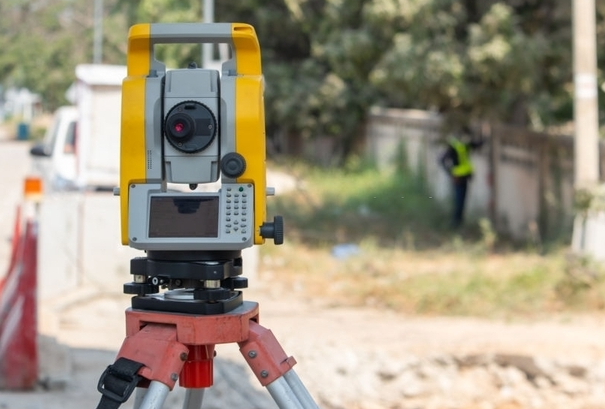
Theodolites have been used in surveying, engineering, construction, and alignment work for many years. They are useful when the main job is to measure angles accurately rather than collect full point data.
Common theodolite uses include:
- Measuring horizontal angles
- Measuring vertical angles
- Checking alignment
- Basic construction layout
- Establishing or checking lines
- Training new surveyors on angle measurement fundamentals
A digital theodolite gives the user an electronic angle reading on a display, which makes it easier to read than older optical or vernier-style instruments. However, most theodolites do not provide the same distance measurement, onboard storage, coordinate calculations, or robotic operation features found in modern total stations.
If your work mainly involves angle measurement and you do not need the instrument to calculate and record distance-based point data, browse SiteSurv’s selection of surveying theodolites.
What Is a Total Station?
A total station is an electronic surveying instrument that combines a digital theodolite with an electronic distance meter. It measures horizontal angles, vertical angles, and distance. From those measurements, it can help calculate point positions, elevations, coordinates, and layout information.
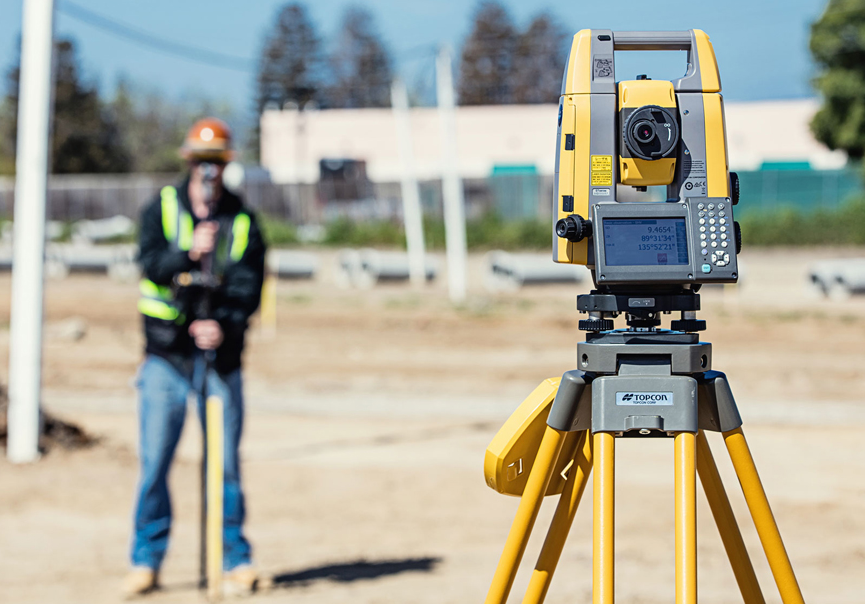
Total stations are widely used in modern surveying because they allow crews to collect more complete field data faster than a theodolite alone. Instead of manually recording angles and doing separate distance calculations, a total station can measure, calculate, and store data electronically.
Total stations are commonly used for:
- Boundary surveys
- Topographic surveys
- Construction layout
- Stakeout work
- Control points
- As-built surveys
- Monitoring work
- Road, utility, and site layout
Many total stations can also connect with data collectors, field software, prisms, tripods, and other surveying accessories to create a more efficient field workflow.
If you are comparing options, start with SiteSurv’s total stations collection or read our total station price comparison guide.
Theodolite vs Total Station Comparison Table
| Feature | Theodolite | Total Station |
|---|---|---|
| Main function | Measures horizontal and vertical angles | Measures angles, distance, and point data |
| Distance measurement | Usually requires separate tools or calculations | Built-in EDM measures distance electronically |
| Data recording | Often manual or limited | Can store, transfer, and process field data |
| Coordinate calculation | Requires manual calculation or separate workflow | Can calculate coordinates and elevations in the field |
| Crew size | Often used with two-person workflows | Manual models often use two people; robotic models can support one-person operation |
| Best for | Angle measurement, alignment, training, simpler jobs | Surveying, construction layout, stakeout, topo, control, data collection |
| Learning curve | Simple instrument, but may require manual math and field note discipline | More advanced, but often easier for complete data collection once trained |
| Cost | Usually lower upfront cost | Higher upfront cost, especially robotic models |
| Power requirements | Digital models use batteries; manual optical models may be less dependent on electronics | Requires batteries and electronic components |
Types of Theodolites
Theodolites can be grouped into a few general categories. The main difference is how the angle readings are displayed and recorded.
Optical or Manual Theodolites
Traditional optical theodolites require the operator to read angles manually through the instrument. These are less common on modern job sites because digital instruments are faster and easier to read, but they are still useful for understanding the fundamentals of surveying.
Digital Theodolites
A digital theodolite displays horizontal and vertical angle readings on a screen. This makes field readings easier, reduces reading mistakes, and speeds up basic angle measurement work. Digital theodolites are a practical option for crews that need accurate angles without paying for a full total station setup.
For example, a digital theodolite may be a good fit for basic layout, angle checks, alignment work, and training where distance measurement is handled separately.
Types of Total Stations
Total stations come in several variations. The right choice depends on your accuracy requirements, crew size, budget, and the type of work you perform most often.
Manual Total Stations
A manual total station measures angles and distances, but the instrument must be manually aimed by the operator. These are common for construction layout, boundary work, topo work, and general surveying where a two-person crew is available.
Manual total stations are usually more affordable than robotic models and can be a strong choice for crews that want total station capabilities without the cost of a robotic setup.
Reflectorless Total Stations
A reflectorless total station can measure distance to certain surfaces without requiring a prism. This is helpful when the point is hard to reach, unsafe to access, or inconvenient for a rod person.
Reflectorless measurement is useful for walls, structures, stockpiles, facades, road features, and other points where setting a prism is difficult. However, reflectorless range and accuracy can vary depending on the instrument, surface, angle, lighting, and jobsite conditions.
Robotic Total Stations
A robotic total station can automatically track a prism and allow the operator to control the instrument remotely from the rod. This can reduce the need for a second person at the instrument and make one-person surveying or construction layout more practical.
Robotic total stations are usually the most expensive option, but they can save significant labor time for high-production crews. If you are trying to build a lean setup, read our guide to the best surveying equipment for a one-person crew.
Main Differences Between a Theodolite and Total Station
1. Total Stations Measure Distance
The biggest difference is that a total station includes electronic distance measurement. A theodolite measures angles, but a total station measures angles and distance together.
This matters because distance is needed for many field tasks, including coordinate measurement, stakeout, layout, and topo work. Without built-in distance measurement, theodolite users must rely on separate tools, manual calculations, or a different workflow.
2. Total Stations Can Store and Process Data
A theodolite is often used with manual note-taking, especially for simpler jobs. A total station can store measurements, calculate point data, and connect with field software or a data collector.
This makes total stations more efficient for crews that need clean digital records, faster point collection, and smoother office-to-field workflows.
3. Total Stations Are Better for Productivity
For small angle-only tasks, a theodolite can be efficient. For larger jobs, a total station is usually faster because it combines multiple steps into one instrument.
Instead of measuring angles with one tool, distance with another, and then calculating points separately, a total station can handle the full measurement workflow in the field.
4. Theodolites Usually Cost Less
Theodolites are generally less expensive than total stations. That lower upfront cost can make sense for schools, training programs, contractors, or crews that only need angle measurement.
Total stations cost more because they include distance measurement, electronics, software capabilities, and more advanced field functionality. Robotic total stations cost even more because of motorized tracking and remote operation features.
5. Robotic Total Stations Can Reduce Crew Size
Most theodolite and manual total station workflows are easier with two people. A robotic total station can allow one person to control the instrument from the prism pole, which can reduce labor needs and improve efficiency on certain jobs.
That is one reason robotic total stations are popular with construction layout crews, small surveying companies, and high-production field teams.
When Should You Use a Theodolite?
A theodolite makes sense when your main need is accurate angle measurement and you do not need full distance measurement or digital point collection from the same instrument.
Choose a theodolite if:
- You mainly need horizontal and vertical angle measurements
- You are doing basic layout or alignment work
- You are training new surveyors on angle measurement fundamentals
- You already have another way to measure distance
- Your budget does not justify a total station
- You do not need onboard coordinate calculation or data storage
Theodolites are also a good educational tool because they force users to understand the fundamentals of angles, sighting, setup, leveling, and field notes. For newer surveyors, learning on a theodolite can build a stronger foundation before moving into more advanced total station workflows.
When Should You Use a Total Station?
A total station is usually the better choice when you need to measure complete field points, calculate positions, record data, or perform layout work efficiently.
Choose a total station if:
- You need both angle and distance measurements
- You perform construction layout or stakeout
- You collect topographic survey data
- You need to store points digitally
- You work with coordinates, elevations, and control points
- You want to reduce manual calculations
- You need to connect with a data collector or field software
- You want one-person operation with a robotic model
For most professional surveying and construction crews, a total station is the more practical long-term investment. It is more expensive upfront, but it can save time, reduce errors, and make field-to-office data handling much easier.
If you are considering a used instrument, make sure to read our guide on what to look for when buying a second-hand total station before making a decision.
Cost, Crew Size, and Workflow Considerations
Price is one of the biggest reasons someone compares a theodolite vs total station. A theodolite is usually more affordable, but cost should not be the only factor. You also need to consider how much time the instrument saves, how many people are needed in the field, and whether the tool fits your workflow.
Think beyond the instrument price. A lower-cost theodolite may be the right choice for angle-only work, but a total station may pay for itself faster if it reduces field time, improves data collection, or allows your crew to complete more jobs with fewer people.
If Your Budget Is Tight
A digital theodolite or entry-level manual total station may be the most practical starting point. Theodolites are lower cost, but if you need distance measurement at all, an entry-level total station may be worth the jump.
If You Have a Two-Person Crew
A manual total station can work well for many surveying and construction tasks. One person operates the instrument while the other holds the prism pole. This setup is common, reliable, and often more affordable than going robotic.
If You Want One-Person Productivity
A robotic total station is the stronger option. It allows the operator to work from the rod and can automatically track the prism. This can be especially helpful for construction layout, stakeout, and crews trying to reduce labor costs.
For more guidance, read how to use a robotic total station.
Accessories You May Need
Whether you choose a theodolite or total station, the instrument is only part of the setup. The right accessories help improve stability, accuracy, and field productivity.
Surveying Tripods
A stable tripod is essential for accurate measurements. Movement, vibration, loose clamps, or unstable ground can affect your readings. Browse surveying tripods to match your instrument and jobsite conditions.
Data Collectors
Many total station workflows rely on a data collector for storing points, running field software, managing jobs, and transferring data. Browse data collectors if your total station workflow requires digital field data.
Field Books
Even with digital equipment, field notes still matter. A good field book helps document control, benchmarks, sketches, measurements, and jobsite observations. Browse surveyor field books or read our guide to the best field books for land surveyors.
Which One Is Better for You?
The better choice depends on what you need the instrument to do.
If you only need to measure angles, check alignment, train beginners, or perform basic layout tasks, a theodolite can be a smart and affordable choice.
If you need to measure distance, calculate coordinates, store data, perform stakeout, collect topo points, or improve field productivity, a total station is usually the better option.
For most modern surveying and construction crews, the total station is the more versatile instrument. It takes the angle measurement capability of a theodolite and adds the distance measurement, data handling, and workflow features needed for professional field work.
Final recommendation: Buy a theodolite if your work is angle-focused and budget-sensitive. Buy a total station if you need a complete surveying instrument for distance, layout, stakeout, coordinates, and digital data collection.
Frequently Asked Questions
What is the main difference between a theodolite and a total station?
The main difference is that a theodolite measures horizontal and vertical angles, while a total station measures angles and distance. A total station also often includes onboard calculations, data storage, and compatibility with data collectors or field software.
Can a theodolite measure distance?
A basic theodolite does not measure distance the same way a total station does. Distance may be calculated using additional methods, measurements, or tools, but a total station has built-in electronic distance measurement for faster and more complete field data collection.
Is a total station a type of theodolite?
A total station includes the angle-measuring function of a theodolite, but it adds an electronic distance meter and digital data capabilities. You can think of it as a more advanced instrument built from the core concept of a theodolite.
Which is more accurate: a theodolite or total station?
Both instruments can be accurate when used properly, but they measure different things. A theodolite can be very accurate for angles. A total station is generally more useful for complete surveying tasks because it measures both angles and distance and can calculate point data electronically.
Is a theodolite good for beginners?
Yes. A theodolite can be a good training tool because it teaches the fundamentals of angle measurement, setup, leveling, sighting, and field notes. However, beginners who need to perform real layout or survey work may eventually need a total station.
Should I use a theodolite or total station for construction layout?
For most construction layout work, a total station is the better choice because it can measure distance, calculate positions, store points, and support stakeout workflows. A theodolite may work for simpler alignment tasks, but it is less efficient for complete layout.
Do I need a robotic total station?
You may need a robotic total station if you want one-person operation, faster stakeout, automatic prism tracking, or improved productivity on larger jobs. If you usually work with a two-person crew and want to control costs, a manual total station may be enough.
Is buying a used total station a good idea?
Buying a used total station can be a good way to save money, but only if the instrument is in good condition and properly calibrated. Always check calibration history, EDM performance, batteries, accessories, software compatibility, and overall condition before buying used.