Surveyor Field Books for Land Surveying & Field Work
Survey Field Books and Weather-Resistant Field Notebooks. Field books are essential tools for surveyors, engineers, construction crews, geologists, inspectors, and field technicians who need to record accurate notes, measurements, sketches, and observations on the job site. Unlike standard notebooks, professional survey field books are built for outdoor work with durable...
View moreShop Field Books by Type
Find the right survey field book for leveling, transit notes, cross-sections, sketches, and daily field records.



Sokkia Hard Cover Level Book


Sokkia Economy Hard Cover Field Book, 80 Page/Size 4-1/2 x 7-1/4"


Timely Drafting Template USA

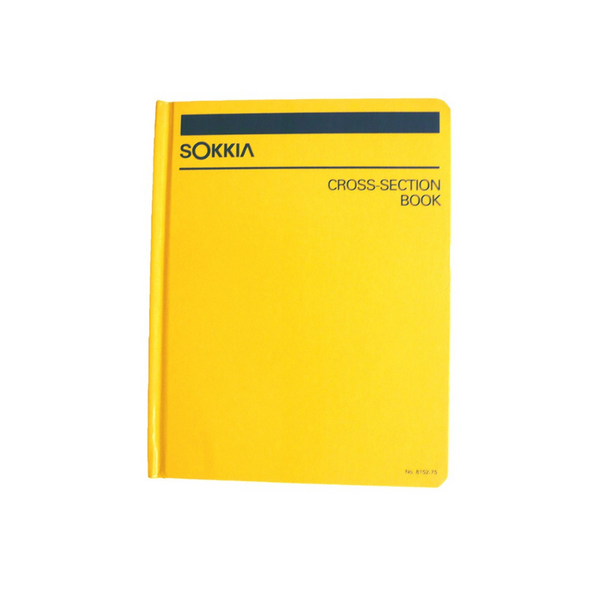
Sokkia Hard Cover Cross-Section Book, 80 Page/Size 6-1/2" x 8-1/2"


Sokkia Hardcover Mining Transit, 80 Page/ Size 4-1/2" x 7-1/4" Field Book


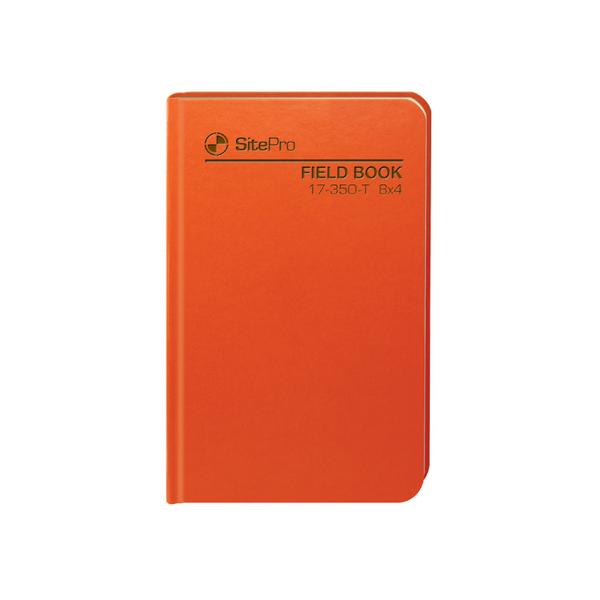
SitePro Level Book


Geomax Transit Field Book, Size 4-1/2 x 7-1/4

SitePro Transit Field Book


Sokkia Economy Soft Cover Field Book, 32 Page/Size 4-1/2 x 7-1/4"


Geomax Level Book


Geomax Hard Cover Cross-Section Book, 80 Page/Size 6-1/2" x 8-1/2"


Geomax Field Book 4 1/2 X 7 /14

Choose the Right Survey Field Book
Different survey field book layouts are designed for different types of field data. Use this guide to compare level books, transit books, cross-section books, and general field books.
Level Books
Best for recording elevation data, benchmark notes, backsights, foresights, station information, and height-of-instrument calculations.
Transit Field Books
Used for angles, distances, traverse notes, alignment data, field sketches, boundary work, construction staking, and mapping.
Cross-Section Books
Designed for profiles, grades, slopes, drainage notes, scaled drawings, road work, site development, and earthwork documentation.
General Field Books
Ideal for daily notes, measurements, inspections, sketches, observations, and general job-site records in outdoor field conditions.
Survey Field Books Built for Accurate Field Notes
Professional survey field books help land surveyors, engineers, construction crews, inspectors, geologists, and field technicians record accurate notes, measurements, sketches, elevations, angles, and job-site observations in outdoor working conditions.
Why Use a Survey Field Book?
Unlike standard notebooks, survey field books are designed for rugged field use. Many include durable covers, dependable bindings, weather-resistant paper, ruled layouts, and compact sizes that fit easily in a survey vest, truck, or field bag.
A quality field book helps keep important project records organized, legible, and protected when working around rain, mud, humidity, dust, and daily job-site wear. Field notes may be referenced long after a project is complete, making durability and organization especially important.
Choosing the Right Field Book Pattern
The best field book depends on the type of data you need to record. Level books are used for elevation work, transit books are useful for angles and distances, cross-section books are ideal for profiles and scaled drawings, and general field books work well for daily notes, sketches, inspections, and project documentation.
Complete Your Field Documentation Kit
Pair your field book with related surveying supplies to keep your crew prepared for measuring, marking, recording, and documenting job-site conditions.
FAQs About Survey Field Books
A field book is a durable, specialized notebook designed for recording data and notes in outdoor or rugged environments. Unlike a standard notebook, a field book features water-resistant or waterproof paper, ultra-durable covers, and specific grid patterns tailored for professions like surveying, geology, and engineering. It's built to protect your invaluable data from the elements.
Field books are essential tools for a wide range of professionals and students, including:
- Land Surveyors
- Civil Engineers
- Geologists & Archaeologists
- Environmental Scientists & Biologists
- Construction Foremen
- Landscape Architects
- Anyone who needs to record critical data outdoors.
- A level book is a field notebook used in surveying to record measurements taken with a level instrument. It is mainly used to find differences in height or elevation between points. The notes usually include backsights, foresights, intermediate sights, and calculated elevations.
- A transit book is a field notebook used to record measurements taken with a transit or theodolite. It is mainly used for measuring horizontal angles, directions, bearings, and distances. These notes are often used for traverses, property lines, road layouts, and mapping.
In simple terms, a level book is used for elevation work, while a transit book is used for angle, direction, and distance work.
Choosing the right pattern is crucial. Each is designed for a specific task. Here are the most common types we carry:
- Field / Survey Pattern: This is the industry standard for surveyors. It features a grid of 4x4 or 8x8 squares per inch on the right page for sketches and plats, with vertical blue lines and a central red line. The left page is ruled for notes and calculations.
- Level Pattern: This pattern is ruled into six columns on both pages for recording leveling data, including common headings like Station (STA), Backsight (BS), Height of Instrument (HI), Foresight (FS), and Elevation (ELEV).
- Transit Pattern: This pattern is designed for recording angular measurements taken with a transit or theodolite. The left page has columns for angles and distances, while the right page has a grid for sketching.
- Cross-Section Pattern: Features a detailed 10x10 grid on both pages, perfect for plotting profiles, cross-sections, and other detailed drawings to scale.
- Journal / Lined Pattern: A standard lined page for extensive notetaking, observations, and daily logs where drawings are not the primary focus.
This often comes down to personal preference and worksite conditions.
- Sewn Bound Books: These are the most durable and archival-safe option. The signatures are sewn together, meaning pages will never fall out. They are the standard for legal and long-term records.
- Spiral Wire-O Books: These books have the advantage of laying perfectly flat and allowing you to fold the cover back 360 degrees, which is convenient when you have limited space or need to hold the book in one hand.
Hardcover: Offers maximum durability and protection. The rigid cover also provides a firm, flat surface to write on, which is invaluable when you don't have a desk or flat surface available.
Softcover (e.g., Fabrikoid): More flexible and lightweight, making it easier to slip into a vest pocket or pack. It still offers excellent water and wear resistance. Choose a hardcover for ultimate protection and a softcover for portability.
Proper record-keeping is vital. Here are the best practices:
- Use a permanent ink pen or a dark pencil.
- Never erase a mistake. Instead, draw a single line through the error, write the correction above, and initial it. This maintains the integrity of the original data.
- Number your pages and keep a table of contents at the front.
- Start each day on a new page, noting the date, project name, location, weather, and team members present.
A regular notebook is not a reliable tool for field work. Its paper will tear, smudge, and disintegrate when exposed to rain, humidity, or mud. The cost of losing a day's, or a week's, worth of data far outweighs the investment in a proper field book. Our field books are designed as professional grade equipment to ensure your notes survive the same conditions you do.